On Remembrance
Why do we leave something behind when someone is gone?
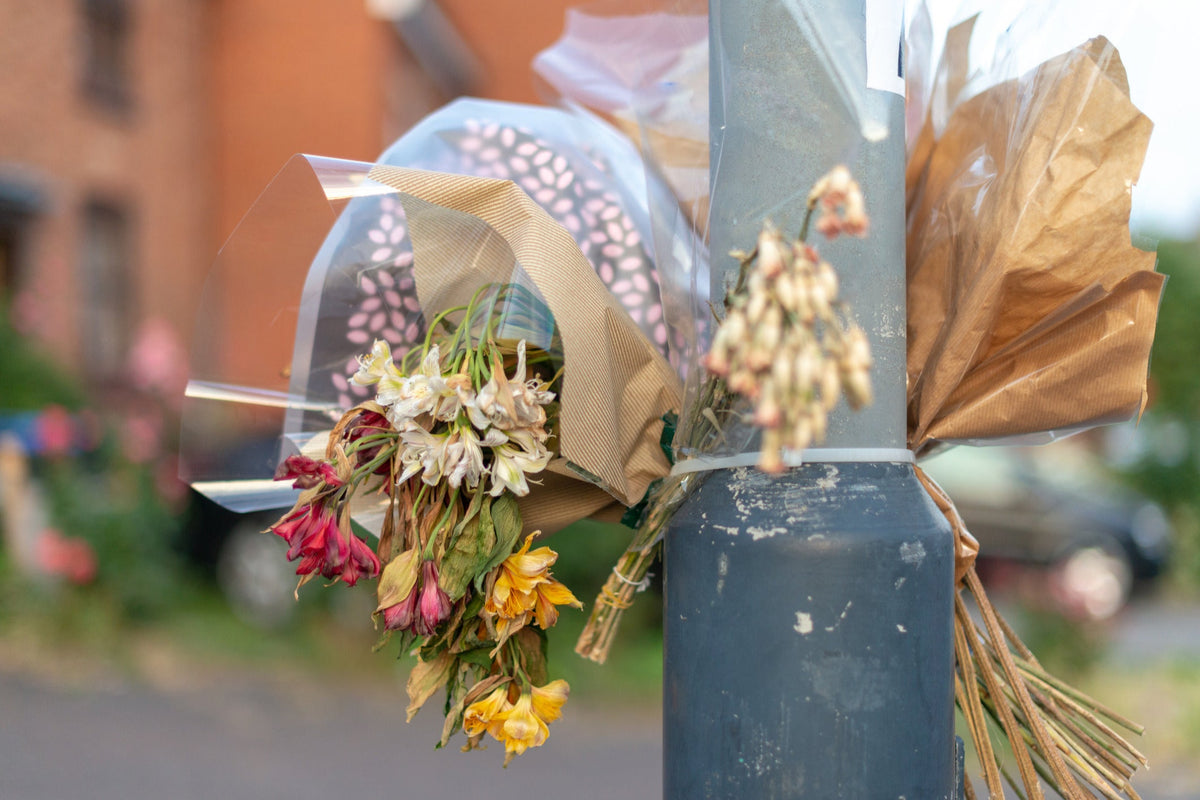
In the days after Princess Diana died in 1997, the gates of Kensington Palace disappeared beneath flowers.
Not hundreds.
Not thousands.
Millions.
People travelled from across Britain and beyond to leave bouquets at the palace gates. Some left handwritten notes. Others left photographs, candles or small personal objects.
Many of these people had never met Diana, and yet they felt compelled to leave something. I have always found that strangely moving.
A flower cannot change what has happened. It cannot bring someone back. It cannot even speak.
So why did so many people need to place one there? Perhaps because remembrance is not only something we do inside our minds. Perhaps we need somewhere to put it.
A physical place. An object. A photograph. A flower.
Something that allows an invisible feeling to become visible.
There is a reason memorials exist in almost every culture. We build monuments. We light candles. We lay wreaths. We plant trees. We keep photographs. We return to the same places.
The rituals change, but the instinct seems remarkably consistent: when something matters deeply, we create something physical around it.
Psychologists sometimes describe this as the role of memory cues. A smell, a sound, a photograph or an object can become associated with an experience so strongly that encountering it again can bring aspects of that experience rushing back.
It explains why an old perfume can suddenly remind you of someone you haven't thought about in years. Why a song can return you to a particular summer.
Why opening a drawer and finding an old handwritten card can make you remember not only what was written, but who you were when you received it.
The object isn't the memory. It is the doorway to it.
Perhaps that is why flowers have such a peculiar relationship with remembrance.
They are beautiful, but temporary.
We know they will fade and somehow that makes them more appropriate, not less.
We don't give flowers because they will last forever. We give them because they exist beautifully for a while.
There is something almost poetic about placing something temporary beside something permanent.
A flower beside a gravestone. A wreath beneath a monument. A bouquet beside a photograph.
The flower says:
I remember.
And perhaps, just as importantly:
I was here.
I think this is why certain gifts become so much more than objects.
A handwritten note kept in a drawer for twenty years. A bottle saved from a wedding. A photograph tucked inside a book. Flowers dried and pressed between pages.
None of these things would be particularly valuable to anyone else.
But to the person who kept them, they can be almost impossible to replace.
Their value isn't in the object. It is in the moment attached to it.
This makes me think differently about the flowers we create at Stem & Cellar.
We make arrangements designed to remain. Not because lasting beauty is inherently better than fresh flowers, but because there is something beautiful about giving a person the opportunity to keep a physical reminder of a moment.
Perhaps the arrangement remains on a shelf or table, quietly occupying the space between everyday life and memory. And months later, someone walks past it. They remember and perhaps they simply smile.
That, to me, is one of the most beautiful things an object can do.
It doesn't demand to be remembered.
It simply gives memory somewhere to live.
From the Cellar Table
For those who believe giving is an art.
Written by Sara
Founder, Stem & Cellar